Perhaps it is perfectly reasonable to be schizophrenic in views about Elon Musk. I certainly am.
I’m awed and terrified at the same time. On one hand, I am genuinely in awe of what Musk and the engineers at SpaceX have achieved. Reusable rockets returning to Earth and landing vertically would have sounded like science fiction not very many years ago. Thousands of relatively small satellites now form a communications network that delivers high-speed Internet to some of the most remote places on Earth. And Starship is attempting another extraordinary leap in launch capability.
Whatever anyone thinks of Musk personally, these are remarkable engineering achievements. And in the Falkland Islands, Starlink has been transformational.
I have written a great deal about Starlink over the last few years. I campaigned strongly for Falkland Islanders to use it, helped with the petition that eventually led to changes in VSAT licensing, and watched it transform Internet access for many people across the Islands.
So readers might reasonably assume that because I am an enthusiastic supporter of Starlink, I must also be an enthusiastic supporter of Elon Musk. I am not.
Indeed, I can be in awe of what SpaceX has created while also being deeply uncomfortable, sometimes even terrified, by the power that comes with controlling communications infrastructure on which countries, economies, and, increasingly, military forces using Starshield can become dependent. Those two views aren’t contradictory. Increasingly, I think they belong together.
Events in Ukraine over the last two weeks have brought that dichotomy into particularly sharp focus for me and many others.
Why Ukraine makes this personal
This is an unusual subject for OpenFalklands, but I’ve recently worked with Kyiv-based Ukrainian companies and have followed the war in Ukraine closely since Russia’s invasion. Like most people, I find most of what is happening there extremely difficult to watch and comprehend.
I am deliberately not going to discuss the latest events involving Starlink, Starshield and Ukraine here. Even as I write this, traditional news channels and social media are full of them; claims and counterclaims come from several directions, and the situation changes daily. Anything I write about the details today could easily be overtaken by events tomorrow.
But what is happening has brought one much broader issue into particularly sharp focus for me. Who ultimately controls a communications system when someone becomes critically dependent on it? That question matters well beyond Ukraine. And it matters to the Falkland Islands.
The other Starlink story – the Falklands
In the Falklands, Starlink has been transformational. Before personal VSAT licences were finally opened up in November 2025, many Islanders had already discovered what Starlink could provide. Once the licensing barrier was removed, adoption grew rapidly.
For households and businesses, particularly in Camp, Starlink offered something that simply hadn’t existed before: genuinely high-speed Internet connectivity. I remain convinced that allowing Falkland Islanders to use Starlink was absolutely the right decision.
Interestingly, during the licensing debate I heard from plenty of people who desperately wanted Starlink but strongly disliked Elon Musk. Others seemed uncomfortable about allowing the service partly because of their views about Musk himself. My view then was straightforward: whatever you think of Elon Musk, judge Starlink in the Falklands on what the technology can actually deliver to Islanders.
I still believe that. But recent events force me to add something to it.
Remarkable technology does not mean sovereign technology
The broader lesson isn’t that Starlink is bad technology. Quite the opposite. My concern exists precisely because Starlink has become so extraordinarily useful. That is where awe and fear meet.
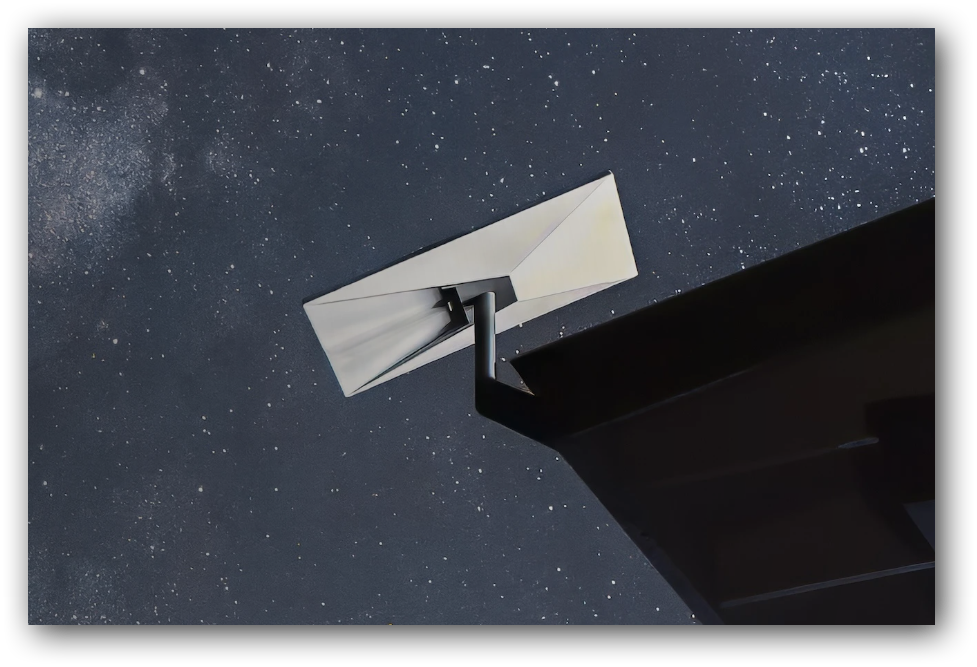
A Starlink terminal may sit on your roof, in your vehicle or beside you in a field. It feels like your communications system. But it isn’t. Someone else owns the satellites. Someone else operates the network. Someone else controls the software, authentication systems and operating policies. And someone somewhere else can potentially change the conditions under which it works.
A company, government, military authority or geopolitical event can make a decision that affects an essential communications service completely outside the control of the people who depend upon it. That isn’t necessarily a criticism of SpaceX. It is simply a consequence of relying upon infrastructure owned and controlled elsewhere.
Starlink isn’t unique in this respect. The same fundamental issue applies equally to other international satellite systems, including the Intelsat and OneWeb satellite capacity Sure South Atlantic uses.
The danger of replacing one dependency with another
For many years, the Falklands telecommunications debate has revolved around dependence on one local telecommunications provider. Today, that provider is Sure. Starlink changed the equation. For the first time, many Falkland Islanders could obtain a completely separate broadband connection that didn’t depend upon Sure’s local access network. It introduced competition where none existed and, just as importantly, added resilience. But the Falklands should be extremely careful not to replace one dependency with another.
Replacing overwhelming dependence upon Sure with overwhelming dependence upon Starlink would not solve the underlying strategic problem. It would simply replace one dependency with another. That is particularly relevant as FIG considers what Falklands telecommunications should look like after Sure’s current exclusive licence ends in December 2027.
I have consistently argued that the future should not be about choosing between Sure and Starlink. It should be about creating a telecommunications environment where no single company, technology, or international route becomes indispensable. That could mean locally controlled infrastructure, multiple service providers, Starlink and other LEO satellite systems, resilient international connectivity, and regulatory arrangements that encourage genuine competition.
Sure could potentially have a role in that future. So could Starlink. So could companies that are not currently operating in the Falklands. The important thing is that none of them should become irreplaceable.
Perhaps the irony is the important part
There is considerable irony in all this. I spent years arguing that Falkland Islanders should be free to use Starlink. I remain delighted that they now can. I still marvel at the technology every time I think about what those little dishes are actually doing: communicating with a constantly moving constellation of satellites hundreds of kilometres above the Earth and delivering broadband speeds that would have seemed extraordinary in the Falklands only a few years ago. That is the awe.
But I can also see how extraordinarily important Starlink has become in many parts of the world, and feel deeply uncomfortable about what happens when such a capable technology becomes so important that a decision made thousands of miles away can immediately affect those who depend on it. That is the fear.
And perhaps there is nothing inconsistent about holding both views simultaneously. You can admire extraordinary technology without wanting to depend on it. You can admire what Elon Musk’s companies have achieved without admiring Elon Musk. And you can campaign vigorously for Falkland Islanders to have access to Starlink while arguing just as vigorously that the Falklands should never become totally dependent upon Starlink.
If that makes me a little schizophrenic about Musk and Starlink, I’m perfectly comfortable with that.
The bigger lesson for the Falklands
Ukraine and the Falklands could hardly be more different, and I am certainly not suggesting that their circumstances are comparable. But the telecommunications lesson transcends geography and geopolitics. Resilience does not come from finding one brilliant technology or one trusted telecommunications company.
It comes from ensuring that when one system fails, changes its rules, becomes unaffordable, is politically constrained, or simply becomes unavailable, there is somewhere else to go.
Perhaps that is the real dichotomy surrounding Starlink. It can be both one of the best things to happen to Falklands telecommunications in years and a warning about the dangers of becoming too dependent upon it.
The Falklands were right to embrace Starlink as an alternative. They would be wrong to allow it to become the only alternative.

Chris Gare, OpenFalklands, October 2026, copyright OpenFalklands