
In response to ongoing concerns about Sure South Atlantic’s broadband performance in the Falkland Islands, the Communications Regulator has supported the installation of replacement measurement probes within Sure Falkland Islands’ network. These could serve as the basis for a new Sure “speed” broadband Key Performance Indicator (KPI) in 2027.
As described in the Regulator’s 2024 annual report, the 3rd-party probes approved and installed in 2021 proved operationally disappointing: “The probe data regarding line speed has proved to be unreliable, with the result that no KPI for line speed has been established.”
But first, what are ‘Network Probes’?
IP network performance probes measure how well a network operates by generating and analysing test traffic, assessing metrics such as latency, packet loss, throughput (the technical term for network speed), and sometimes application performance.
They can be hardware-based (dedicated devices providing stable measurements) or software-based (running on servers or virtual machines). Many deployments use a combination of both.
Their usefulness depends on location: probes within the network may reflect internal conditions accurately but may not fully represent the experience of end users, particularly where access technology, distance, or external connectivity, such as satellites, play a major role.
Typical metrics that can be measured include:
- Latency – how long it takes for data to travel between two points
- Packet loss – whether data is being dropped
- Throughput – the achievable data rate under test conditions
- Jitter – variation in delay (important for real-time services)
- Application performance – e.g. web page load times or server response
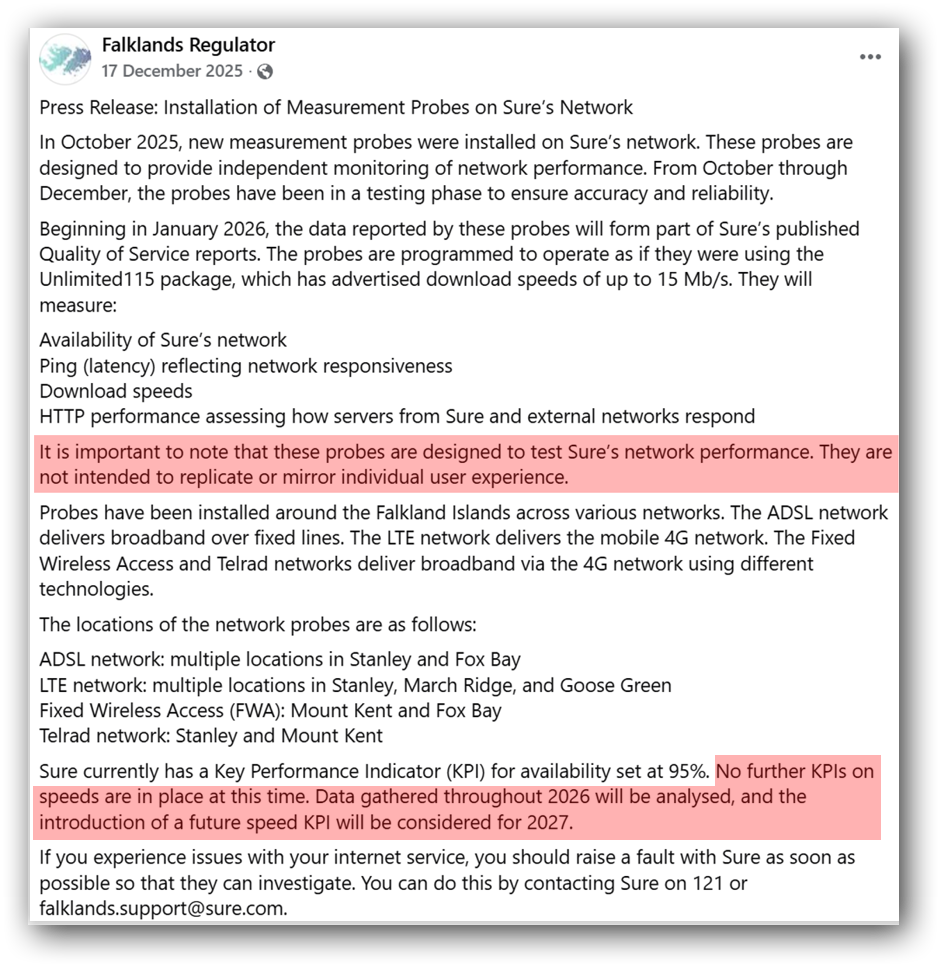
Communications Regulator’s December 2025 press release
It is stated in the Communications Regulator’s December 2025 press release that the probes are intended to measure Sure’s network performance and “…are not designed to replicate or reflect individual user experience.” This distinction is important. Put simply, if the probes are not designed to capture real user experience but instead measure abstract network performance, it is unclear how the resulting KPIs can fully reflect the quality of service consumers actually receive.
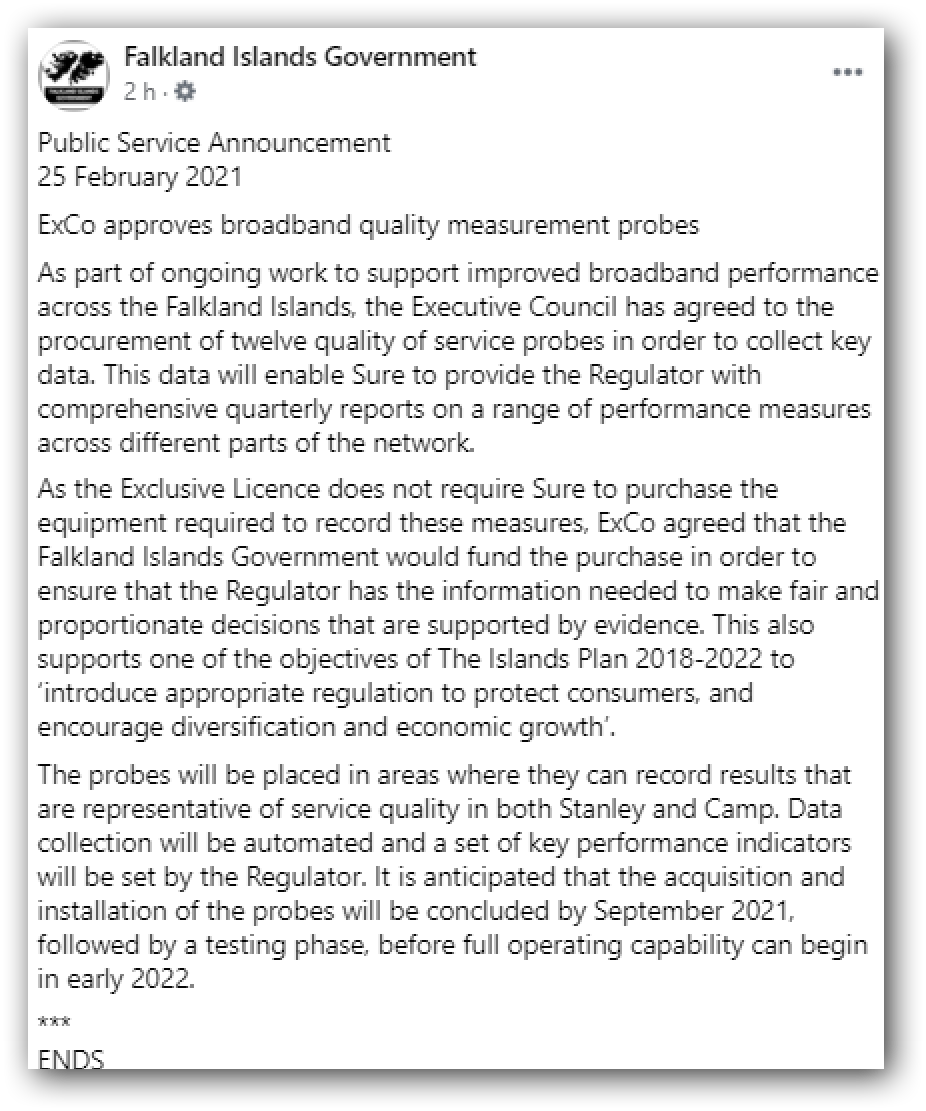
This new corrective approach does not appear to fully address the concerns previously raised in OpenFalklands’ posts regarding the use of probe-based download speed as a KPI for Sure’s broadband service.
If you are wondering why the term déjà vu is used, it is worth considering how many OpenFalklands posts have been dedicated to this issue. The reason is straightforward: repeated attempts to define a broadband speed KPI have faced persistent challenges for the same underlying reasons.
April 2025: FIG’s Broadband Speed KPI: Why the Metric Doesn’t Measure Up
8th August 2019: Falkland Islands’ Regulator’s QoS Direction: Part 2 – Discussion
14th August 2019: Falkland Islands’ Regulator’s QoS Direction, Part 1 – what is it?
21st March 2019: The enigma of monitoring the quality of the Falkland Islands’ broadband service – Part 2: Looking forward.
19th March 2019: The enigma of monitoring the quality of the Falkland Islands’ broadband service – Part 1: Looking backwards.
This history matters, but there is no need to revisit it – please! The most recent post from April 2025 clearly captures the problem; the earlier pieces mainly serve to demonstrate how little the fundamental approach has changed since 2021, when it was first proposed.
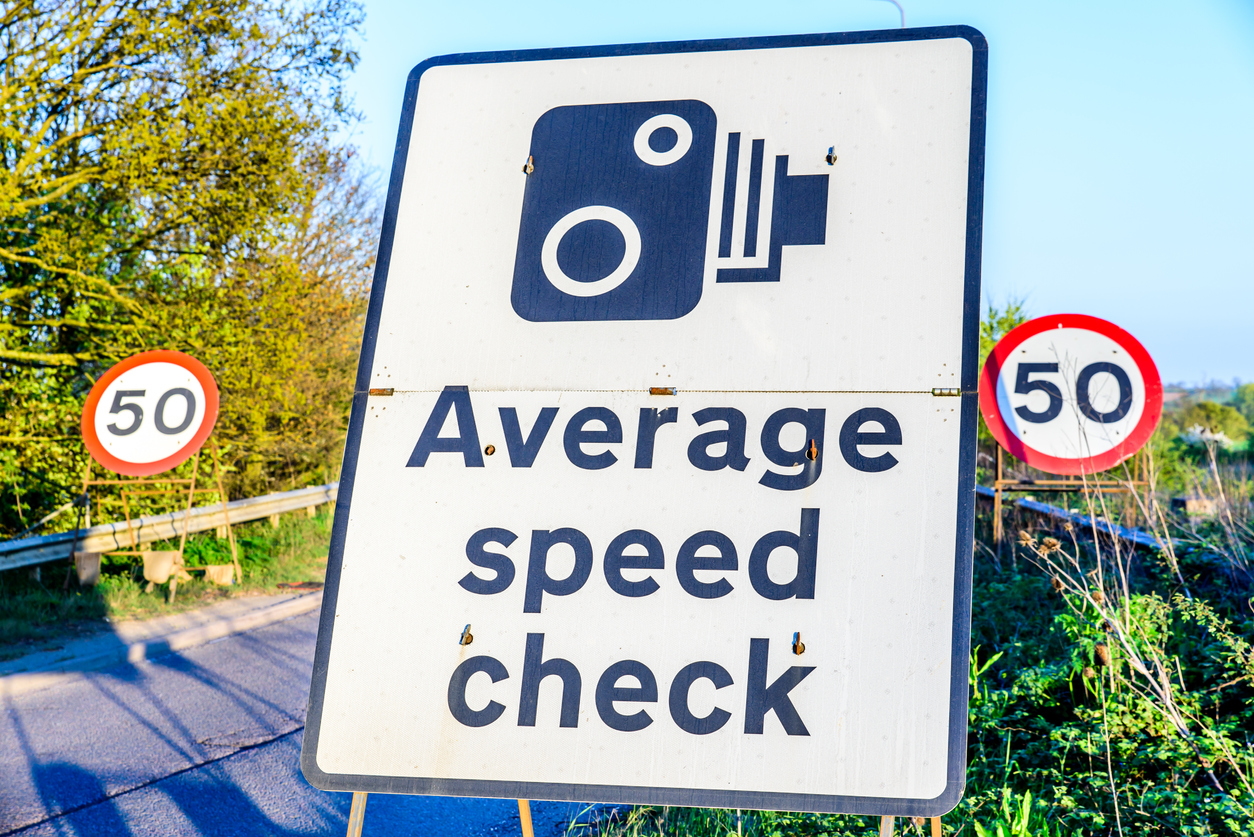
The irrelevance of network performance for a user experience KPI
The regulator has explicitly stated that the probes are “not intended to replicate or mirror individual user experience.” This is a significant limitation. A measurement system that does not reflect real user experience will not fully serve as a reliable benchmark for consumer broadband performance or demonstrate whether the service delivered aligns with what consumers reasonably expect.
While such probes may have value for monitoring internal network performance, this is primarily an operational matter for Sure rather than a direct measure of end-to-end service quality. A public-facing download speed KPI derived from network-level data therefore risks providing limited insight into whether customers, across different locations, access technologies, and usage conditions, are actually receiving the speeds they pay for.
In consequence, the probes may not fully address consumer concerns. Probes may have internal or diagnostic value, but may be less appropriate if used as standalone consumer KPIs. Although they may enhance the regulator’s visibility into certain aspects of Sure’s network behaviour, they may offer only a limited indication of the real-world broadband experience of users in the Falkland Islands and are therefore of limited value as consumer-facing performance indicators.
Undefined measurement scope and exclusion of the satellite link
The probes are deployed in the following locations;
- ADSL: Stanley, Fox Bay
LTE (4G mobile): Stanley, March Ridge, Goose Green - Fixed Wireless Access (FWA): Mount Kent, Fox Bay
- Telrad network: Stanley, Mount Kent
While these locations provide some geographic and service-type coverage, probe location alone does not resolve the more fundamental methodological limitations.
The published description of the probes provides limited clarity on where the test servers used for latency, download speed, and HTTP performance measurements are located (though they are likely to be located primarily in Sure’s offices in Stanley). This lack of transparency is compounded by the statement that “HTTP performance [assesses] how servers from Sure and external networks respond,” without defining what constitutes an “external network,” where such servers are based, or how they relate to the service being measured. In a remote, satellite-dependent environment such as the Falklands, server location is not a minor technical detail but a decisive factor in performance outcomes.
Without clear information on whether measurements terminate on-island, within Sure’s own network, or beyond the satellite link, it is difficult to interpret what the proposed 2017 speed KPI may actually represent. This ambiguity may obscure whether reported results reflect internal network behaviour, international satellite-based connectivity constraints, or a selective combination of both.
Crucially, the Intelsat satellite links themselves remain potentially excluded or not fully represented in the KPI framework, despite being the dominant source of latency, congestion, and peak-time degradation. Treating this indispensable component of the broadband service as “out of scope” because it is supplied by an ‘upstream’ provider elevates contractual boundaries above consumer reality. Any KPI that excludes the most performance-limiting element of the service path may not be considered fully meaningful, robust, or fit for regulatory or consumer purposes.
ADSL speed degradation
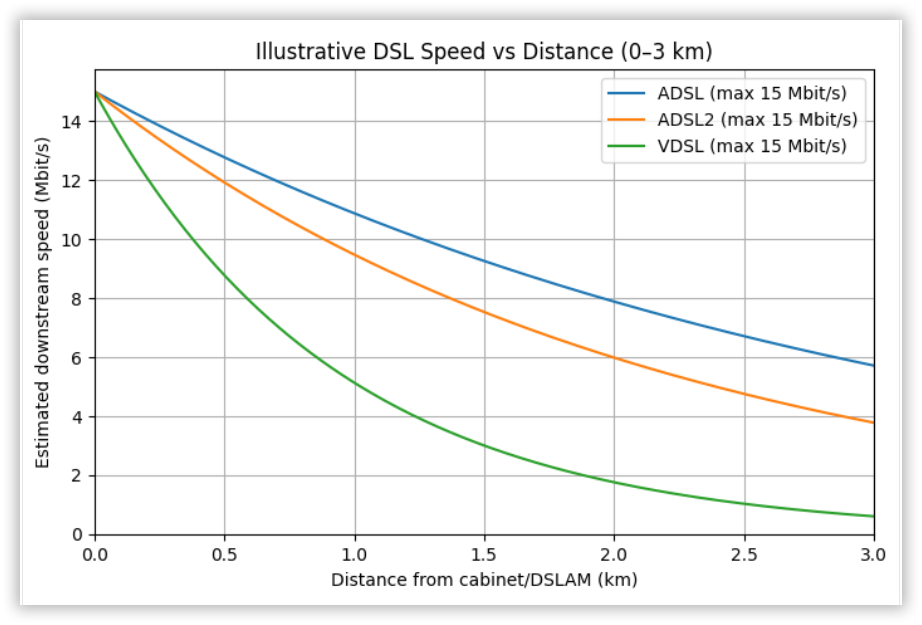
Sure’s access network relies heavily on legacy ADSL technology, where achievable download speeds are inherently constrained by the physical distance between a customer’s premises and the exchange. Factors such as line length, copper quality, and local noise conditions are primary determinants of performance, yet they occur at the network’s outer edge and cannot be captured by centrally located probes.
As a result, probes may indicate stable or acceptable core network performance while consumers on longer or degraded lines experience significantly poorer speeds. Any KPI derived from such measurements risks portraying a level of performance that may not reflect what customers receive in practice. Centrally measured results may appear consistent and compliant, yet may bear limited resemblance to the speeds and reliability delivered over ageing copper infrastructure. From a consumer standpoint, a KPI that does not account for distance-related degradation is not simply incomplete – it risks giving a misleading impression.
Proposed 95% Availability KPI.
While on the subject of Sure Falkland Islands’ KPIs, the Regulator’s Quality of Service for Q3, 2025 report states that “In 2023, a new KPI was introduced that service availability should exceed 95%. A KPI on line speed is in development and to be introduced for Q1 2027.”
An uptime figure of 95% for a broadband or a voice service is widely regarded as well below industry baselines. In practical terms, it allows for around 36.5 days of downtime per year, or roughly a day and a half each month! This level of disruption would be clearly noticeable to most users and difficult to reconcile with expectations of a reliable service.
By comparison, even modest service benchmarks typically start at around 99% uptime (about 3.6 days of downtime per year), with many networks targeting 99.5% to 99.9% or higher. More stringent standards, such as 99.99%, reduce annual downtime to less than an hour. It would be expected that Sure’s Service Level Agreement (SLA) KPI with its upstream geostationary satellite provider, Intelsat, would be an enterprise-grade 99.95%. By industry standards, anything below ~99.9% is generally considered substandard for upstream ISP connectivity. Even maritime Starlink services are experienciening 99.4% availability.
95% as a KPI sets expectations well below what most consumers would reasonably consider an acceptable level of broadband reliability.

Roundup
Because probe management is undertaken by Sure rather than an independent body, it is difficult to rule out the possibility that results may be influenced, given that network operators inherently have the ability to prioritise certain types of traffic or performance internally.
In summary, while the new probes may have technical value for Sure’s network engineers for internal network monitoring, they do not fully resolve the central issues facing broadband consumers in the Falkland Islands. A speed KPI that neither reflects the physical realities of an ageing ADSL access network nor measures the full end-to-end broadband service path may not be fully consumer-relevant.
This further investment in probes risks repeating past efforts without delivering meaningful improvement. Until performance measurement reflects the actual conditions under which customers use the service, broadband download-speed KPIs will risk providing regulatory reassurance that may not fully reflect consumer experience, rather than meaningful consumer protection.
Ultimately, the issues discussed here reflect well-established principles widely recognised by experienced network engineers. It is therefore difficult to understand why these proposals, in their current form, continue to be considered.
Chris Gare, OpenFalklands, April 2026, copyright OpenFalklands